
Cape Town, South Africa — 05 Nov 2025
From Engineer to Executive: The Evolution of a Technical Founder
Adapting from Builder to Leader
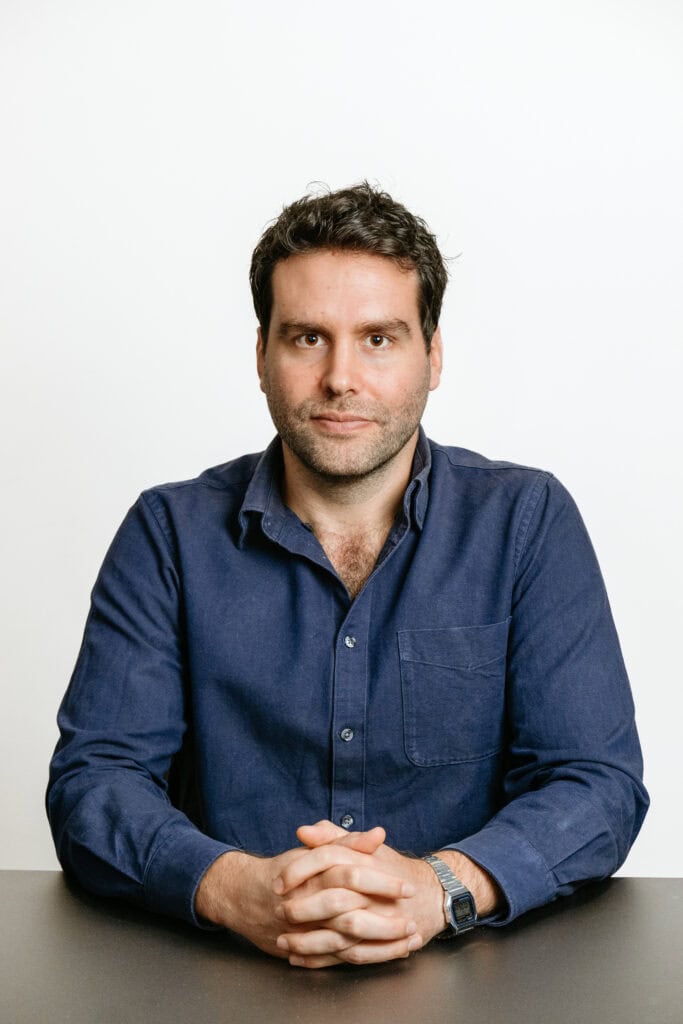
In deep tech, technology isn’t the only challenge. Being a technical founder means adapting from being a technical expert with a bright idea, to a business leader. This, for many, is even more challenging than building the tech itself.
This month, we’ve been reflecting on one of the toughest parts of building successful deep-tech startups: the people behind them. More specifically, the technical founders who must evolve from engineer to executive – from building the product to building the company.
It’s a shift that demands adaptability. It requires moving from prototypes and lab work to and board meetings, and sometimes, it even means knowing when to hand the reins to someone else.
That ability to evolve often defines who makes it into the top 5% of startups that exit.
To explore what that journey looks like in practice, we spoke to Braden van Breda, founder and CEO of AI Diagnostics, one of our most promising portfolio companies. Braden shared what he’s learned on the path from engineer to startup leader.
Let’s start with your background.
Braden: In my previous job I was developing heart related implants and catheters for specialist users. It was clear that the impact we were set to make was limited by the lack of highly trained personnel and the specialized environment these interventions required.
As a result, the co-founders and I decided to start AI Diagnostics with the vision to focus our technology endeavours to empower our most abundant healthcare providers; nurses and community health workers. Easy to use data acquisition tools with specialist-like insights arouse as the best fit for this user while maximizing impact. Soon we converged on a digital stethoscope and disease specific detection AI models as the initial product line.
As 3 engineers, with Mechanical, Data Science and Electronics expertise we were able to dive deep into the technical feasibility of each of our proposed solutions. Once we decided on the direction, we could cheaply create initial prototypes to validate or kill good and bad ideas rapidly
What was the turning point when you realised that building a great product isn’t the same as building a great company?
Braden: I think I was aware of this going into AI Diagnostics from previous work experiences. However, I witnessed it first hand on two separate accounts. Firstly, only after our milestone of getting our core product completed and getting approval to sell in South Africa did I realise how much more it takes to be market ready, with payment systems, support structures, logistics, customer dashboards… The second major realization has been over the last year and a half; while the product has undergone a iterative improvements, the internal confidence to take on larger projects, and the external confidence to invest in and support us has grown exponentially, largely due to the growth and quality of the team. This reiterates that although a great product is an essential part, it’s certainly not the only required ingredient to build a great company.
As a technical founder, what were the hardest parts of stepping into the business side of leadership?
Braden: My personal experience was that initially I lacked the knowledge on how to raise capital and what interested investors, how to combine our ambition with the tangible plan. However, personally I am curious by nature and enjoy being out of my realm of knowledge so learning these business-related norms and skills has been part of the enjoyment. Naturally if I was clued up from the start, things may have run a bit smoother.
Looking back, what were some growing pains you now recognise were linked to your technical mindset?
Braden: As founders we could technically do everything, so we did. As a result, we diluted our focus. If I were to get a repeat, I would outsource non-key IP technical facets of our business to solid partners earlier, enabling us to internally double down on the stuff that makes us special.
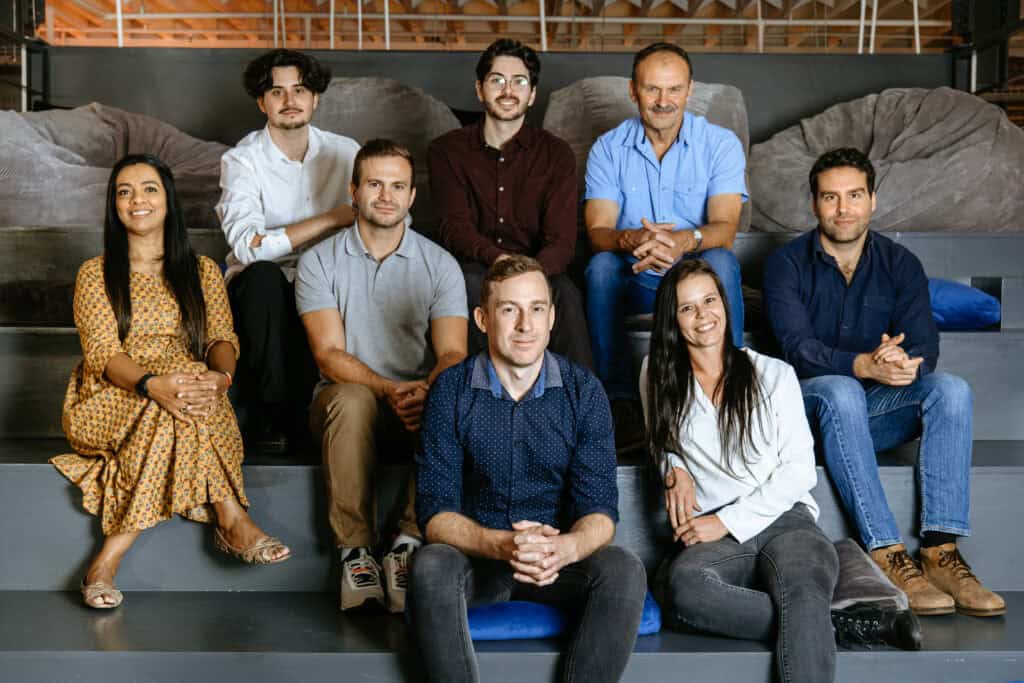
As the company and team grew, how did you adapt your leadership style, and what does it look like today?
Braden: There has been a conscious shift towards responsibility migration, I think it is super useful to know the nuts and bolts of the business for as long as you have the capacity to do so. However, over the last year and a half the responsibility of holding that information and the decisions that come with that has migrated to the appropriate leadership team members. Different divisions and members require different rates of migration and for me it’s a constant feedback loop to determine what the right rate is.
Formulating and stress testing the company vision has remained a key focus point, however communicating that vision internally, and crucially getting team buy-in and their feedback on the vision, has now become more of a focus which helps to keep the various company divisions aligned intrinsically.
Fundamentally I try to lead with transparency and that goes a long way to taking care of the rest.
For other technical founders just starting out, what advice would you give?
Braden: I would suggest getting someone in your corner who has been through the journey before, this can even be on a super limited basis. You’d be surprised how many people are willing to support you when they see your passion. I would also suggest doing an incubator/accelerator type programme early on, it really helped me confront and process a lot of the business gaps well before launch.
Final Thoughts
The technical founder’s journey is far from linear. Building a successful deep-tech company takes more than confidence, commitment, and technical depth. It requires a shift in perspective from product, detail and execution, to people, systems, and alignment.
The founders who thrive are those who treat learning as a discipline: seeking out advice from those who came before, and having the humility to act on it. That willingness to adapt is often what separates those who build great technology from those who build great companies.